Priorities are changing here at Buenos Aires and this may have been one of the last "normal" weeks for us. There has been a decision to move all of the Masked Bobwhite Quail (our endangered species) from the breeding facility, where they are housed indoors, to the outdoor flight pens near the headquarters. This is to happen by March 1st. It should be good for the birds. There are about 100 in the flight pens right now and they seem to be doing well. A bit too well perhaps as most of them are pretty tame for quail. We spread birdseed as a treat when we go into their pens and they usually come running. Only the pen with an experimental group of chicks act much like wild quail. They stay hidden in the grass and shelters as far away as possible from humans.
The quail in the flight pens only take up a few of the 80' X 20' enclosures and the rest of the pens need some work. The entire facility is being upgraded to make it more secure, deter rodents better and improve the living environment for the birds. This work is now the priority since the refuge is committed to moving them by March.
After our shopping trip on Tuesday, the rest of the week was almost normal, aside from a couple of meetings to discuss the upcoming work at the flight pens. On Wednesday, our usual biology day, we had a new task. It was rainy and cold outdoors so we started doing seed preparation in the biology building. As blog readers know, we have been harvesting Four-wing Saltbush seed and have collected two large (40 gallon) trash bags full of them. The seeds, as they come off the bush, have four quarter-inch wings with the actual seed in the center (hence the the name).
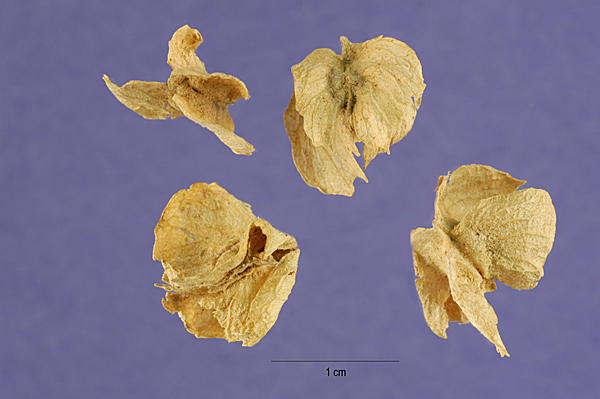 |
| Four-wing Saltbush Seeds |
 |
| Seeds |
We rubbed and crushed the wings through a series of screens, raising a lot of dust and creating a lot of chaff, but we did most of a bag of dry seeds. This technique didn't work as well later.
On Thursday we did our weekly hydrology measurements at Arivaca Cieniega but we hurried through them as rain was predicted and we had an 11:30 AM staff meeting. We got back to the refuge early enough to do our weekly stint at the flight pens checking the quail and their food and water. We finished just as the rain was starting.
In the afternoon we went back to our seed preparation project. This time our technique didn't work quite as well as before. The seeds in the second bag were not as dry as the ones in the first bag and the wings didn't break up into small bits and flake off. We rubbed them through the screens, but most still retained sizable wing bits and the chaff was also too big to fall through the smaller screen.
Although we processed quite a bit of seed, it took up more space and was generally larger than our first effort.
Although we processed quite a bit of seed, it took up more space and was generally larger than our first effort.
It turns out that much of this work wasn't really needed in the context of the refuge. The seed core is only separated from the wings in commercial processing so that the resulting seeds will flow through mechanical seeding equipment. The intent here is to embed the seeds by hand in balls of sand and clay that can be hand-cast onto the grasslands. The seeds with wings will work just fine in seed balls.
Friday it was back to the quail facility to help for the first time since before Christmas. Paula has been making progress assembling new brooder cages to give the chicks more room. They are pretty much full-size birds now. Although the plan is to move them out to the flight pens in a couple of months, they still need more space before then.
When we arrived the quail had a Christmas gift for us. It was a nicely wrapped box of Ritz Fudge Covered crackers, a seasonal speciality. They must have saved up for quite a while for them.
In addition to our normal chores of checking the quails and their food and water, we also cut and installed cardboard "pecking boards" in the existing chick brooders. These are small squares of corrugated cardboard that are attached to the ends of each cage. It gives the birds an additional pecking target. They are interested in anything new in their cages and, in some of them, the chicks, who are normally a bit skittish, would hang back while we installed the boards and then crowd around to peck at it. When Ellen and I had finished installing 60-some boards, the sound of hundreds of birds pecking at cardboard was like heavy rain on a tin roof.
Our last task for the day was to help move chicks into the new brooders which are located in the "adult" building. Paula gathered about a dozen and a half birds and put them into a transport box, which was covered with a cloth, and brought to the other building. There we were to put the boys on one shelf of the brooder and the girls on another. The technique is to put your hand into the box under the cloth and grab a bird—carefully! Ellen compared this to some kind of reality show where you stick your hand into a closed box of snakes. They don't bite but they do try to avoid being caught and you're fumbling blindly seeking a bird. As the crate becomes empty, it gets harder to catch a bird.
The idea is to wrap your hand around its back with its head between your two middle fingers, holding the wings in, a classic banding hold. Then you pull it out from under the cloth and put it into the brooder shelf though a spring-hinged door—carefully! There are only about 600 of these birds in the world, so you don't really want to injure one.
Paula did the first one and Ellen and I did the rest. On previous days, I'd picked up a couple of birds who'd escaped as we were checking their cages, but Ellen hadn't picked one up yet. She was thrilled to actually hold a live bird. The quail seemed happy in their new temporary homes and we headed back to the refuge to wash all our clothes. The side effect of handling birds is ... well, you can guess.
Photos
Friday it was back to the quail facility to help for the first time since before Christmas. Paula has been making progress assembling new brooder cages to give the chicks more room. They are pretty much full-size birds now. Although the plan is to move them out to the flight pens in a couple of months, they still need more space before then.
When we arrived the quail had a Christmas gift for us. It was a nicely wrapped box of Ritz Fudge Covered crackers, a seasonal speciality. They must have saved up for quite a while for them.
In addition to our normal chores of checking the quails and their food and water, we also cut and installed cardboard "pecking boards" in the existing chick brooders. These are small squares of corrugated cardboard that are attached to the ends of each cage. It gives the birds an additional pecking target. They are interested in anything new in their cages and, in some of them, the chicks, who are normally a bit skittish, would hang back while we installed the boards and then crowd around to peck at it. When Ellen and I had finished installing 60-some boards, the sound of hundreds of birds pecking at cardboard was like heavy rain on a tin roof.
Our last task for the day was to help move chicks into the new brooders which are located in the "adult" building. Paula gathered about a dozen and a half birds and put them into a transport box, which was covered with a cloth, and brought to the other building. There we were to put the boys on one shelf of the brooder and the girls on another. The technique is to put your hand into the box under the cloth and grab a bird—carefully! Ellen compared this to some kind of reality show where you stick your hand into a closed box of snakes. They don't bite but they do try to avoid being caught and you're fumbling blindly seeking a bird. As the crate becomes empty, it gets harder to catch a bird.
The idea is to wrap your hand around its back with its head between your two middle fingers, holding the wings in, a classic banding hold. Then you pull it out from under the cloth and put it into the brooder shelf though a spring-hinged door—carefully! There are only about 600 of these birds in the world, so you don't really want to injure one.
Paula did the first one and Ellen and I did the rest. On previous days, I'd picked up a couple of birds who'd escaped as we were checking their cages, but Ellen hadn't picked one up yet. She was thrilled to actually hold a live bird. The quail seemed happy in their new temporary homes and we headed back to the refuge to wash all our clothes. The side effect of handling birds is ... well, you can guess.
Photos

No comments:
Post a Comment